Herbert Schonberg
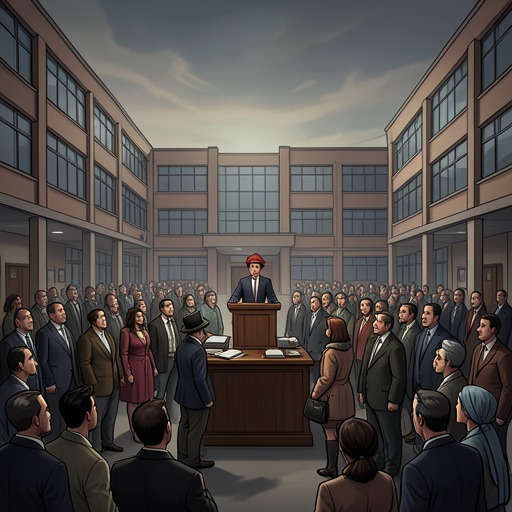
Straight ManHerbert Schonberg is a union organizer and shrewd campus negotiator whose attempt to enlist William Henry Devereaux, Jr. exposes the alliances and pressure tactics of the university’s labor crisis. He offers William Henry Devereaux, Jr. a place in the union’s campaign while making clear that neutrality may leave him isolated; later, Herbert calls for a strike vote intended to prevent seniors from graduating. His role joins personal persuasion to institutional leverage, without making the two identical.
Identity and Position
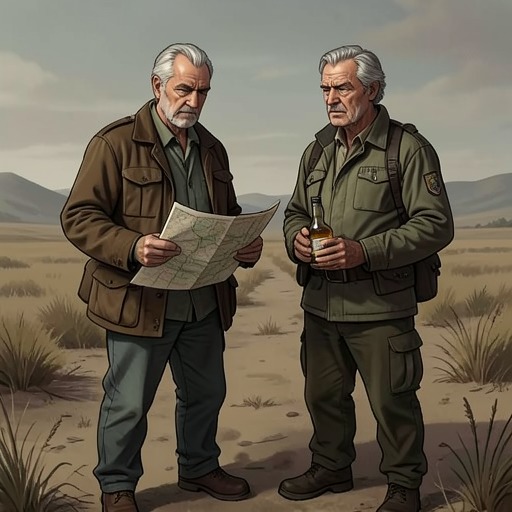
Herbert enters the story alongside Paul Rourke, an unlikely companion in what the narrator calls abnormal times. The pair arrive at William Henry Devereaux, Jr.’s home after apparently tracking him down, having walked through his woods. Herbert, a small man with a large belly and little practice with physical exertion, is puffing when he approaches; Rourke is not. The contrast gives their arrival a lightly comic physical texture, but Herbert quickly takes charge of the conversation. He is glad to see William Henry Devereaux, Jr., shakes his hand, and explains that a major crisis is brewing.
Herbert’s position is complicated by a long-running history of conflict with the narrator and with the union. He acknowledges that William Henry Devereaux, Jr. has disagreed with the union almost from the beginning, and that his objections are not merely about the grievances filed against him. Herbert understands that he sees the union as protecting incompetence and promoting mediocrity. Rather than deny the conflict, Herbert treats it as material to negotiate around: the union does not require him to become a committed union man for life, only to make a choice in the immediate contest.
Recruiting William Henry Devereaux, Jr.
Herbert’s appeal combines flattery, political arithmetic, and an account of what is already happening behind the scenes. He calls William Henry Devereaux, Jr. sharp, then argues that the issue is not intellectual ability but whether he will act amid the rumors and impending upheaval. His proposed role is substantial: William Henry Devereaux, Jr. could be the union’s public point man, drawing on his television appearances, or at least rally his own department. The English Department has more votes than any other department, Herbert points out, even though its members do not usually vote as a bloc.
He also reveals that the alignment may already be turning against William Henry Devereaux, Jr. Herbert says he has recently spoken with Teddy Barnes and June Barnes, who are prepared to side with Paul Rourke and Finny. The appeal therefore carries a double message. Herbert presents William Henry Devereaux, Jr. as indispensable to the union’s effort, but also lets him know that friends and colleagues may be joining the opposition. The invitation to become a leader and the warning about isolation coexist; Herbert’s persuasion depends on making both legible without treating them as contradictory.
When William Henry Devereaux, Jr. suggests rejecting both sides, Herbert considers the possibility but calls neutrality dangerous. He asks directly to know which side William Henry Devereaux, Jr. will support, whether the union or Dickie Pope, and says he does not want him to be coy. Herbert is not asking for ideological conversion. He presents the choice as practical allegiance in a conflict where people need to know whom they can count on. He also raises the possibility that the grievances against William Henry Devereaux, Jr. could disappear, an inducement that makes the negotiation’s personal stakes explicit.
Motives and Personal Stakes
Herbert’s stated motives are both institutional and personal. He says the union is the right side and could use William Henry Devereaux, Jr.; he also wants to give something back to a place that has paid him decently and treated him well. With a year and a half remaining before retirement, Herbert believes the worst outcome for himself would not be catastrophic. That relatively secure position helps explain why he can speak candidly about the campaign, though it does not make him indifferent to its result.
His animus toward Dickie Pope is sharper than his general language of institutional loyalty. Herbert says that if he could urinate on Dickie Pope’s grave, he would count it as a gift to higher education. The narrator sympathizes with the sentiment, but Herbert’s own declaration gives the appeal a distinctly personal edge: resisting Dickie is both a political cause and an outlet for hostility. He nevertheless appears unusually sincere when he describes having been treated well and wanting to repay the institution. The scene does not reduce his organizing to either principle or revenge; it places both motives in the same pitch.
From Persuasion to Institutional Pressure
Herbert’s private effort to secure William Henry Devereaux, Jr.’s allegiance is followed by a more formal labor tactic. With only a week left in the term, he calls for a strike vote. The stated purpose is to prevent seniors from graduating, a measure presented as the closest the union can come to exercising real political power. The timing makes the threat especially consequential: the pressure is directed not only at administrators but at students approaching graduation.
The later outcome shows the limits of that strategy. After Dickie Pope is dismissed and Jacob Rose, a familiar and respected figure, becomes chief executive, the faculty vote overwhelmingly against striking, rejecting the position urged by their union. Faculty members who would be directly affected by the next year’s budget cuts are among those whose interests the vote fails to advance. Herbert’s call thus belongs to a wider contest in which union procedure can mobilize pressure but cannot guarantee solidarity. His character is defined by that tension: he is capable of direct, personal persuasion, yet his institutional leverage remains dependent on colleagues who may refuse to follow.